
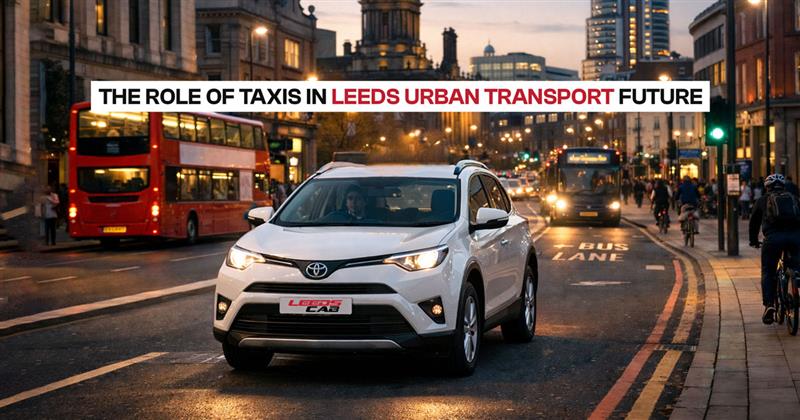
While public transport plays a vital role, it cannot meet every door-to-door or time-sensitive travel need. This is where taxis emerge as a key pillar of future urban mobility.
Reliable local services like Leeds Cab provide flexible, inclusive, and efficient transport, making them an essential part of Leeds long-term city planning and sustainable mobility strategy.
Leeds Changing Urban Transport Landscape
Leeds urban transport landscape is evolving as the city grows into a major UK hub. An increased population and economic activity are putting pressure on public transport, especially during peak hours.
While buses and trains remain vital, they often lack door-to-door convenience and flexibility. This has increased demand for on-demand transport that adapts to individual travel needs.
Why Taxis Remain Essential in Modern Cities

Taxis remain essential in modern cities because they provide flexibility that fixed-route transport cannot match. Door-to-door convenience saves time for commuters, families, and travellers, especially when carrying luggage or travelling with specific needs.
Unlike buses and trains, taxis operate on demand, making them highly efficient during busy schedules. They are also reliable during off-peak hours and late nights when public transport is limited. In areas with poor connectivity, taxis ensure people remain linked to the wider city.
As a solution to last-mile connectivity, local services like Leeds Cab play a vital role in keeping urban travel seamless and accessible.
Supporting a Smarter & More Connected Leeds
Taxis play an important role in supporting a smarter and more connected Leeds by integrating seamlessly with modern urban infrastructure. Technology such as online booking systems, GPS tracking, and digital payments make taxi services faster, safer, and more convenient for passengers.
Real-time vehicle availability helps optimize routes and reduce unnecessary congestion on busy roads. By offering a reliable alternative to private car ownership, taxis help lower traffic volumes and support sustainable travel choices.
Local services like Leeds Cab enable seamless urban mobility, connecting people efficiently to homes, workplaces, transport hubs, and key destinations across the city.
Accessibility & Inclusive Transport for All
Inclusive transport is a vital part of effective urban planning, ensuring that everyone can move around the city with dignity and independence. Wheelchair-accessible taxis are not a luxury but a necessity, providing safe and comfortable travel for passengers with mobility needs.
Taxis also offer essential support for elderly passengers, families with children, and individuals who require extra assistance when travelling. In areas or situations where public transport is limited or unsuitable, taxis become a critical link to essential services, workplaces, and social activities.
By offering flexible, door-to-door transport, local services like Leeds Cab act as a powerful enabler of social mobility, helping to create a more inclusive and connected Leeds.
The Human Element: Professional Drivers & Local Knowledge
The human element remains central to the future of taxi services, even in an increasingly automated world. Licensed and professionally trained local drivers bring valuable experience and accountability to every journey.
Their deep knowledge of Leeds roads, traffic patterns, and alternative routes allows them to make smart, real-time decisions that technology alone cannot always achieve. Human judgement plays a vital role in ensuring safety, adapting to unexpected conditions, and delivering a personalized service.
Trust, customer care, and local expertise continue to set up taxis apart from automated transport solutions. Services like Leeds Cab demonstrate why skilled local drivers remain essential in the AI era.
Taxis vs Ride-Hailing Apps in the Urban Future
As cities plan for the future of urban mobility, clear differences between taxis and ride-hailing apps continue to matter. Licensed taxis operate under strict local regulations, offering pricing stability, accountability, and consistent service standards.
Unlike ride-hailing platforms that rely on surge pricing during busy periods, taxis provide fixed and transparent fares that passengers can trust. Local taxi operators are also deeply committed to the communities they serve, unlike global platforms with limited local accountability.
For this reason, cities continue to rely on licensed taxi services as a dependable part of their transport systems. Trust, reliability, and consistency are key to future urban travel, and local services such as Leeds Cab continue to meet these expectations.
Taxis vs Ride-Hailing Apps in the Urban Future
In the future of urban transport, taxis and ride-hailing apps will continue to play different roles. Licensed taxis operate under strict local regulations, ensuring pricing stability, accountability, and consistent service standards.
Unlike ride-hailing platforms that rely on surge pricing during peak demand, taxis offer fixed and transparent fares that passengers can trust. Local taxi operators are also more invested in the communities they serve, compared to global platforms with limited local responsibility.
For these reasons, cities still depend on licensed taxi services as a reliable transport solution. Trust, consistency, and regulated service quality remain essential for sustainable urban mobility, which is why local providers such as Leeds Cab continue to be a vital part of future city transport systems.
What the Future Holds for Taxi Services in Leeds
The future of taxi services in Leeds will be shaped by closer integration with the city’s wider urban transport planning. Smarter booking systems, real-time tracking, and digital payments will continue to improve convenience and efficiency for passengers.
At the same time, greener fleets and low-emission vehicles will support Leeds sustainability goals. Safety, accessibility, and reliability will remain at the core of taxi services, ensuring travel is inclusive for all residents.
As a flexible and dependable transport option, local providers like Leeds Cab will continue to play a long-term role in supporting Leeds evolving urban mobility needs.
Conclusion
Taxis will continue to be a core component of Leeds transport future, supporting a city that is growing, evolving, and becoming more connected. By balancing modern technology with sustainability goals and human-led service, taxis offer flexibility that fixed transport options cannot replace.
Smarter systems and greener fleets enhance efficiency, while professional drivers ensure safety, accessibility, and trust. Local providers like Leeds Cab are well aligned with Leeds future mobility needs, combining innovation with local expertise.
As urban travel demands increase, taxis will remain a dependable and future-ready solution for the city.