

The technological revolution currently being experienced in the industry, such as easy booking systems and electric vehicles (EVs), is altering the way taxis are being conducted. As the market keeps changing, drivers need to be informed about the regulatory changes, what the customer wants and any technological developments in the transportation sector.
This will keep the drivers competitive and will enable them to have a better quality of services as well as ensure that the need to travel safely and efficiently will be met.
Key Trends in the Private Hire Industry in 2025-2026
1. Technological Advancements
The industry of private hire is still being transformed by technology. Modern taxi services have become largely dependent on GPS tracking, ride-hailing apps and automation. These technologies guarantee the fact that they provide efficient route planning, increased response time, and more accurate ride tracking.
This has led to a large number of taxi companies embracing online booking systems, and this has enabled customers to book their rides via websites or Apps with ease. The change assists businesses to remain competitive in a more digital world.
2. Sustainability & Electric Vehicles
As more individuals worry about climate change, eco-friendly transport is increasingly being demanded. The transition to electric vehicles (EVs) and hybrid cars is becoming one of the key developments in the private hire market.
Cabbage services are embracing this shift in an effort to minimize carbon footprints and attract customers that have a green conscience. Most organizations are starting to use low-emission vehicles instead of traditional petrol and diesel cars in order to comply with regulation and consumer requirements of sustainability.
3. Demand for Convenience and Safety
The consumers are demanding more convenience and safety in their traveling choices. Taxi services have become more convenient and efficient as a result of the emergence of contactless payments, convenient online booking, and efficient service delivery. Also, the safety of passengers has taken the first priority.
The companies are engaging in driver background checks, clean cars, and driver training to ensure high standards of safety and quality of service delivery. These are some of the measures that ensure that the taxi services are able to satisfy consumer demands as well as establishing trust and reliability.
Regulatory Changes Impacting Leeds Taxis and Drivers
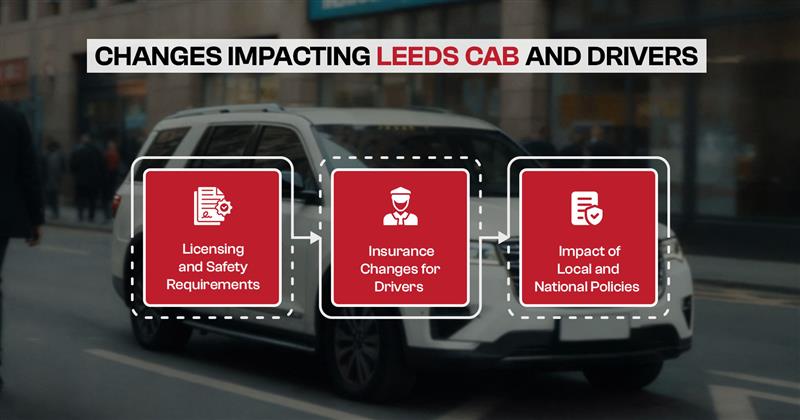
1. Licensing & Safety Requirements
The UK private hire industry is a very regulated sector to provide safety and reliability. These rules involve qualifications of drivers, criminal background, and inspection of vehicles. Every private hire taxi driver has to be properly vetted to verify whether he possesses the required expertise and qualified criminal record.
Also, cars are checked periodically in order to comply with safety requirements. Leeds Cab will meet these licensing and safety requirements to ensure that their drivers and fleet offer safe and reliable services to the passengers.
2. Insurance Changes for Drivers
In the areas of private hire, insurance plays a decisive role. Emerging changes in insurance policies have affected drivers in the UK. Drivers must possess public liability insurance, passenger insurance, and vehicle insurance so that they operate legally and safeguard the passengers.
Leeds Cab makes sure that all their drivers are insured through extensive insurance policies, and this adds some assurance to the drivers as well as their passengers. This is coverage of both the driver and passengers during their travels.
3. Impact of Local and National Policies
The operation of private hire companies, such as Leeds Cab, can be influenced by changes in the local and national policies. As an example, the local zoning regulations can determine the points where taxis are permitted to pick up people, and the age restrictions of the drivers can be different in various regions.
Moreover, fare pricing can be influenced by the regulations of taxis. To keep up with all the regulatory changes in the local and national sectors, Leeds Cab keeps abreast to be in compliance and adjusts to the emerging policies. This way, they would be able to keep on providing equitable and honest services without going against the law.
How Leeds Cab is Adapting to Industry Changes
1. Driver Training and Support
Leeds Cab recognizes that driver training is key to providing excellent service and staying competitive. Drivers undergo regular training to improve their customer service skills and local knowledge. This ensures that they can navigate Leeds efficiently, offer pleasant passenger experience, and handle any challenges that may arise.
Leeds Cab also provides ongoing support to drivers, helping them stay updated on industry changes and regulations. With this approach, Leeds Cab ensures that its drivers are always prepared to deliver top-quality service in an ever-changing market.
2. Use of Technology in Leeds Cab’s Operations
The power of technology has been accepted by Leeds Cab in order to simplify operations and enhance customer experience. Their dispatch system consists of GPS tracking to track vehicles at all times and thus establish the optimal routes and quicker response times. The system is also capable of updating both passengers and the drivers in real-time and keeping them updated during the ride.
Furthermore, the mobile application and the webpage of Leeds Cab provide such functionalities as simple booking, price visibility, and price estimations. These inventions will enable customers to make their ride reservation at minimum time and assuredly, as they are sure that they will receive transparent correct pricing.
3. Driver Benefits
Leeds Cab has controllable working hours and fair remuneration and this means that it is a desirable destination for the drivers. Despite operating in a competitive market, the company guarantees job security and a good working environment for its drivers.
Leeds Cab appreciates its drivers and treats them fairly and creates a sense of satisfaction among the drivers. Such a commitment would contribute to recruiting and retaining experienced drivers in Leeds Cab who are committed to delivering high-quality services.
What Drivers Need to Know to Stay Ahead
1. Staying Informed on Regulatory Changes
Drivers, to be competitive and deliver the best service, should be informed about the local regulations and licensing laws. The modifications of regulations may influence not only the qualifications of drivers but also the inspection of vehicles.
By keeping abreast of information, the drivers are able to keep away from the fines as well as provide safe, legal and dependable service. Frequent communication by the firm or the government of the city is useful in ensuring that drivers abide by the norms of the industry.
2. Adapting to Consumer Preferences
The preferences of the consumers keep changing, and drivers need to keep in touch with them. There is a growing demand for clean, efficient, and safe rides by passengers. Having a car that is well maintained and offers a comfortable ride is important in retaining customers.
Moreover, there is an increase in the need to have eco-friendly products, such as electric cars (EVs) and hybrids. By adopting these environmentally friendly cars, drivers will be in a better position to satisfy the demand and attract environmentally conscious passengers.
3. Embracing Technology
Modern taxi services revolve around technology. To remain competitive, drivers must adopt ride-hailing applications and bookings via their mobile phones. Such tools enable drivers to make routes more optimal, enhance customer services, and boost booking efficiency.
By becoming familiar with these technologies, drivers have an opportunity to offer more valid service, be ahead of the competitors, and satisfy the increased demands of the tech-savvy passengers. The ability to keep abreast with the current apps and tools is major to success in the dynamic industry in the long term.
Conclusion
With the industry of private hire still developing, it is essential that drivers keep up with the changes in the regulations, utilize new technologies, and provide high-quality service at any time. There will be the need to keep up with the local laws, expectations of the customers, and improvements in technology so that drivers can be competitive and offer the best services they can.
It is advisable that drivers and operators keep up with the market and adapt to customer needs and leverage new tools to work ahead. In the case of Leeds Cab drivers, adopting such changes will result in further success and it will assist in addressing the increasing demands of the industry.